2/24/2006

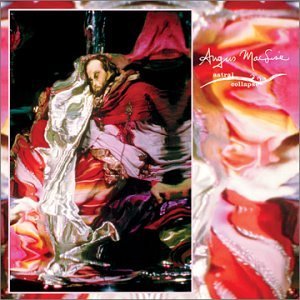
Angus MacLise - "Astral Collapse" CD (review)


Smothered Under Astral Collapse

For those of you who like Throbbing Gristle, Coil, William S. Burroughs, Aleister Crowley, magick and experimental electronics, this is right up your alley.

Angus Maclise was a composer, master percussionist, poet, mystic, calligrapher, occultist and former Velvet Underground member. His music runs the gamut of the experimental realm: drone, electronics & noise, tape cut-ups, spoken word, minimalism. Though he created a vast body of work from the 60's to 70's, it went unreleased, the master tapes sitting in a box in someone's closet. Only recently has his music been seeing the light of day via several releases on the Quakebasket label. The latest, Astral Collapse, compiles his more electronic/noise workouts:


1.
Smothered Under Astral Collapse - Angus recites his Tibetan Buddhist poetry over prepared tape cut-ups. His source material for the prepared tapes is Tibetan chanting and some odd drum loops. The way he manipulates it gives it a really churning, eerie feeling.

2.
6th Face Of The Angel - Pure droning. 17+ minutes of transcendant, tape-delayed organ with little intricate change ups in oscillation and resonance.

3.
Beelzebub - This is the only percussion piece on the album. The way he plays the drums and then sonically treats the mix creates a feeling musique concrete or early electronic pulse music. it's very glitchy.

4.
Cloud Watching - a beautifully sinister piece. it's a murky blend of organic instruments that just twinkle and drone along in a hazy impressionistic cloud.

5.
Dracula - Trial by noise. Angus rips apart the air with an ARP modular synthesizer. This kind of destruction wouldn't be heard again until Coil's Constant Shallowness Leads To Evil.

6.
Dawn Chorus - several layers of prepared tapes cut up into a collage of white noise, eastern drone and field recordings from the East. Angus leads us back into more Tibetan poetry before letting us go.

You can really hear the sound that
COIL would take on and expand. It foreshadows the concepts of Moon's Milk: Spring Equinox or Under an Unquiet Skull, Astral Disaster (they are eerily similar in more than just name) and Constant Shallowness Leads To Evil....to quote Jhonn Balance, Angus was a "liminal genius".

~Reviewed by: Philippe Landry (2/24/05)

----------------------------------------------------------------------------------------------------

**For more info, read an earlier post focusing on the history of Drones and on the genre's creator, LaMonte Young (teacher/mentor to John Cale & Angus Maclise), and LaMonte's "The Eternal Theater", etc.

2/21/2006

FM EINHEIT (Einsturzende Neubauten) - INVISIBLE RECORDS - Martin Atkins (PiL, Pigface)


Martin Atkins has come a long way from being a fresh-faced 18 year old drummer miming on American Bandstand during a surprise appearance of Public Image Limited. When he left PIL, he started the Invisible Records label as his contribution to release independent music unseen in the mainstream. Through his Pigface band he has networked with a small army of freelance musicians from the underground rock and industrial scenes, so that now Invisible is the American home for Test Dept, Mick Harris/Scorn, Skinny Puppy's Ogre (aka 'R' with Atkins), and Psychic TV's Genesis P Orridge. After 10 years the label is celebrating their milestone with the humbly-titled the Lowest Of The Low tour, which will play three dates in Canada during April featuring Pigface (with Gus Ferguson from Test Dept), the long-anticipated Scorn, the techno/industrial group Not Breathing, the breakbeat-oriented Bagman, Vancouver's Dead Voices On Air and former Einsturzende Neubauten member FM Einheit.

FM Einheit or "Mufti" to his friends, will be coming with his first new band since he left Neubauten during the sessions for their boring 1996 album Ende Neu. FM had been the chaotic element in Neubauten for 15 years, charging their live shows with an imposing physical presence by throwing himself into his drumming on metal percussion and amplified springs. With fellow percussionist, NU Unruh, he invented custom-made instruments and researched unique sound sources — even using his fists to thump out a rhythm on Blixa Bargeld's chest for the track "Thirsty Animal."

"To rebuild music in a new way was the thing that I was most interested in Neubauten," he said from rehearsals in his Steinschlag ("stone beat") studio in Bavaria, in Southern Germany. "To do something and in the next moment just to let the whole thing collapse and look at it from a different angle. I started the original sessions for Ende Neu but I left during the recording. I just didn't see any stepping forward in Neubauten. It wasn't collapsing and rebuilding anymore. I just got a bit bored with it."

Now Neubauten's original spirit of experimentation can be heard on Einheit's work with Andreas Ammer, including the award-winning productions Apocalypse Live and Radio Inferno (an update of Dante's classic that features narration by BBC broadcaster John Peel). Since Einheit's involvement with Neubauten's 1990 collaboration on playwright Heiner Muller's postmodern version of Shakespeare, Die Hamletmaschine, Einheit received a number of commissions to do music for theatre, dance and radio. Over a period of five years he created music for Muller's adaptation of the Prometheus myth, Edward Bond's Lear, an interactive dance/theatre production Sensation Death, a version of the Faust legend (featuring Blixa as Mephisto!) and several others yet to be released. Invisible has just recently issued another Ammer/Einheit radio production, Deutsche Krieger ("German Warriors"), which was made for Bavarian Broadcasting. The project is an ambitious attempt to encapsulate 20th century German history in three personalities: Kaiser Wilhelm, Adolf Hitler and Ulrike Meinhof.

"The idea was to use original sound sources to let history speak for itself, because every time you open a book, all the information is channelled by the author. But while we worked on these three parts, we found we were researching the history of recorded media. So from the First World War you have gramophone discs based on the invention of Thomas Alva Edison. And from the Second World War you have recordings that were played on the radio. And the third part was from TV."

Like Radio Inferno, Deutsche Krieger is a mix of spoken word, quoted music and original sound. Although it is in German the disc is nevertheless interesting for the research into the broadcast sources: in the case of part one, "Kaiser Wilhelm Overdrive," speeches were recreated after the fact; part two "Adolf Hitler Enterprise," contained equally fake reports from the war fronts, including bogus newscasts from submarines done War Of The Worlds-style in radio studios. Ammer/Einheit react to this fake history with their editorial selection of backing music and by putting re-edited words in the mouths of the speech makers.

"It was no problem to get the commission to do the first and second part, but when we wanted to do the third part about the Baader-Meinhof terrorists, which for us was most important because it was the part of history we had lived through, then we got a lot of problems. Nobody wanted to broadcast a piece about the Baader-Meinhof. This is something that makes you think."

Ulrike Meinhof was a '60s social activist who got caught up in the student protests against the imperialist war in Vietnam. When the German police fired on, and killed some protesters, she and the Baader group went underground and began a series of actions that included bombings and bank robberies.

"I remember it very well, because I was born in 1958, and they died (in jail) in 1977. The whole state of Germany was in hysteria. The media coverage was really oppressive and frightening. I remember my mother would say, 'if you don't go to sleep Ulrike Meinhof will come and get you.' People went in the street to celebrate after it was known they were dead — 'great, now we've got those pigs and they're dead.' It was quite difficult to get the original voices of the terrorists when they were underground. Of Baader, for example, there is nothing. Meinhof did a lot of TV and radio features before she was underground. She would say things like 'if you don't have the possibility to be on TV everyday, if you don't have the possibility of mass media, then why don't you use the only possibility you have, which is go on the street and take direct action.' So at that point she was sort of mixed, she would be sympathetic, but she didn't say you have to bomb. If you want to change something you have to be really radical about it, but I can't sympathise with killing people that aren't responsible. The right way is to change yourself and act in a new way."

On the way from Invisible is Ammer/Einheit's Odysseus 7, as they take the Greek epic into outer space! Music from Einheit's new band of little-known Swiss musicians (including a second drummer, female singer and human beat box) will be released later.

----------------------------------------

12/24/2005

SPK - Interview [Chainsaw #11, 1981]

SURGICAL PENIS KLINIK


This interview took place after their set at a Final Solution gig in Heaven, Charing Cross, supporting Throbbing Gristle and A Certain Ratio [23.12.80].

Heaven is normally a meat-market gay disco and it must rank as the most sordid venue I have ever been to - I'll certainly have doubts about going there again. It was unbearably hot, smoky and very dark towards the end of the evening it was literally impossible to see from one side of the hall to another. Decor (and background music) rather over-the-top disco. All in all, probably just about sordid enough for a Throbbing Gristle/SPK gig.

Incidentally a couple of years ago this. place used to be called the Global Village and had occasional gigs then too - the last time I saw the Users was in there. My, how it's changed.

I first became interested in Surgical Penis Klinik when their single "Meat Processing Section" came out in the summer last year (although it was recorded in their native Australia in 1979). This was in fact their second EP, the first (No More/Contact/Germanik) was released on their own label Side Effects Records early in 1979.

Tonight their set was quite an experience, to say the least. It is probably best described as an all-out attack on your senses. First, there was the sheer volume of sound - the constant low-frequency noises that were played at deafeningly loud volume. The sound itself - deliberately loud so as to cause distortion - more like the "Slogan" side of Meat Processing Section than the "Factory" side, but always with the booming low frequency noises in the background, that were missing on the records. The ligbts and the strobes were pointed straight at the AUDIENCE and not the group...

Current line-up:
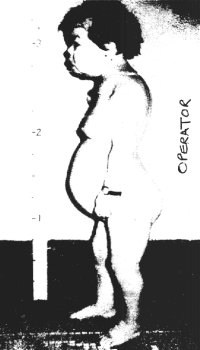
Operator - Synth/Tapes/Rhythms
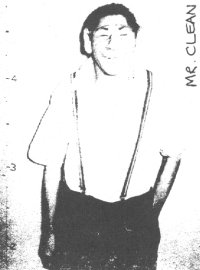
Mr Clean - Production engineer
Wilkins - Guitar/Bass

Genesis P-Orridge told me once that this group were the most deranged group that he'd ever come across. After seeing their set, and doing this interview, I almost agree...

Charlie: How long have SPK been going?
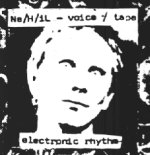
Operator: First started in January 1979 I think, but the first time we played together was June l979 and that was with me, a psychiatric nurse, a guy called Nehil who was a mental patient - schizophrenic, and two punk guys we got to help us, who left soon after to become pop stars.
Charlie: Who with?
Operator: They've got a group of their own in Australia called Secret Secret who are just making a lot of money in the clubs.
Charlie: Are you all Australian?
Operator: No. Wilkins is English, comes from Bristol, and Mr Clean and I don't come from anywhere in particular. We consider ourselves stateless.
Charlie: You were born in Australia, weren't you?
Operator: That's not necessarily true. But don't push it. That's an assumption that we wish to maintain.
Charlie: How many copies did you make of your first single?
Operator: We did two EP's in Australia - three tracks on each - and we made 500 copies of the first one and 500 of the second one, and then we had to do a re-release of 500. Then I came to England on my way to France, to live there - and Genesis of TG wrote to us and said he wanted to do a re-release in England of the second one, so we said yes. The second one has three tracks on the original - the third track was a throwaway which was fucked up after I left and re-mixed by the psycho guy, before he killed himself.
Charlie: He killed himself?
Operator: Yes... and actually recently we had another guitarist who killed himself, so that's why the group's so unstable all the time.
Charlie: Why did they kill themselves?
Operator: Don't know. They didn't tell me. They didn't leave me anything in their wills either, which is annoying.
Charlie: Who writes the lyrics? The words of some of your songs on the first single are a bit over the top.
Operator: Those lyrics were written mainly by Nehil who was the Schizophrenic, but we were working in collaboration all the time. I handled the music, he handled the lyrics. But all the lyrics are over the top. It's just that some of them are sung in German so they'd be over the top to a German, I suppose.
Charlie: There's no point in going over the top in a foreign language.
Operator: Why not?
Charlie: It doesn't seem over the top then.
Operator: But lyrics function as a dictatorial device - if you've got a set of lyrics, they'll tell you what they mean. You've then got no choice about any particular meaning in the piece of sound. So if you write lyrics in German, bad German at that because I can't speak any German, then the audience is free to take whatever meaning they want to from whatever the sound is.
Charlie: Your microphone was very distorted tonight. Was that intentional?
Operator: No, not particularly, but you can't help it when you've got that much noise going on. You can't get a good mix on a mike like that. Plus I'm shouting quite a lot in German because I like the language - it's a little fetish of mine.
Charlie: When you sing in German do you understand exactly what you're singing?
Operator: They're translated from an English idea, but they're usually cut up afterwards, so they probably don't mean anything to a German person either.
Charlie: So do you ever wan to play in Germany?
Operator: I have had thoughts about going to Dusseldorf because that's where DAF and Pyrolator are working, but I'm not sure whether I like their stuff anymore, I just don't like England all that much.
Charlie: Then why are you here?
Operator: I don't like places with any characteristics, I'd like a place that didn't have any characteristics, so I wouldn't feel oppressed by any particular culture, or anything like that. I'm not expecting to find anything, though.
Charlie: It's probably freer here than most places, though.
Operator: It depends what you mean by free. A lot of the things we're doing now are about information overload. For example tonight there was a tape which you probably couldn't hear properly because of the distortion, it was a compilation of chemical warfare and side-effects of psychotropic drugs which is an indication that if we're all excited about chemical warfare, it in effect started in mental hospitals in 1952, with people subjected to it all the time. Another case is a cut-up between several porno loops, hard core and the soft core that you get on advertisements, so we packed them all together, which is the state that you have in the so-called free society. You're just bombarded with shit all the time. And that's what we're saying. We're not trying to dictate any particular set of lyrics to anybody at all.

Charlie: So what kind of a place would you want to live in?
Operator: We'll all end up living eventually inside the head. A head without a world. I have no material needs at all - I live on £5 a week. In London that is some achievement, so they tell me.
Charlie: Do you ever get bored?
Operator: Never. You only get bored if you're expecting something better. And there isn't anything better, everything's the same.
Charlie: Isn't that a negative attitude? I get bored sometimes.
Operator: You must be looking for something. You must have your highs. I think I'm a pluralist to the extent that as much diversity is the best thing. It's categorisation, lines and so on that you get in the music scene in London which kill you. I can contradict myself one second after I've said something, because consistency is just another closed way of thinking.
Charlie: Doesn't consistency mean that you know what you're talking about?
Operator: Consistency generally means sticking to a set line, for example Marxist or left wing line, left wing / right wing - it's all the same - everybody's realising that now.
Charlie: Well I believe in some things and not in others.
Operator: Noem Chomsky, who's a really left wing linguist just signed a manifesto of the Fascist party in France saying that they should be allowed to continue. Because he says it's the only way it'll be controllable - there's no point in trying to stamp it out, that's the way to go about things. That's the way I think.
Charlie: Allowing any party to exist doesn't necessarily mean that you agree with what they are saying.
Operator: Exactly. That's why I wouldn't follow either opinion. One day I'd say that not allowing it to happen is OK. You can't make a decision either way. On any subject. It might help to fill in a bit of background here on why I think this way - it comes from experience in mental hospitals where no decision is ever right. For a schizophrenic person, for example, there's nothing you can do or say to a schizophrenic person that will help them, and being silent doesn't help them either. So what do you do
Charlie: What experience have you had with schizophrenic patients?
Operator: In general... I worked with a lot of alcoholics... senile dementia... manic depressive psychosis... schizophrenia... Schizophrenics are quite interesting. It's a series of superimposed masks with no personality behind - all they can do is switch from one to the other. They're not happy with any of them - they're unhappy with any of them. It's just a series of options - they don't believe in any one of them, they don't think any one of them is better than the other - they don't have anything behind it to stabilize on.
Charlie: Do you identify with them in any way?
Operator: Yes. There is considerable biological evidence that there is an entire schizophrenic system in everybody which surfaces more dramatically in some than in others. Yes, I think most people are schizophrenic to a certain extent. Not the classic split personality bullshit, but in the sense that at times the overcoating devices, the rationalities just break down and they'll go haywire - go crazy. One of our songs is called Retard, about a guy who just went crazy-killed somebody - no motive, nothing at all. He's spent thirty-five years in a mental hospital, paying for it. They couldn't have let him out though, he might have done it again. It's these dilemmas, no-win situations which intrigue me. That's what our music's about.
Charlie: So what are you intending to do now, as a group?
Operator: We'd like to do another gig, on our own, cos we were fucked around a lot tonight. When we were playing, in what position, and all this sort of thing - in other words we were shoved to side and they forgot about us. Not that I mind - I just don't like feeling some asshole's pushing me around. I didn't complain, or anything like that, but I'd rather control it myself.
Charlie: Where would you want to play?
Operator: Interesting venues, hopefully. Not the Marquee, or that sort of stuff. I'm looking into... they've started to rent out the old World War Two underground shelters under London. There's a huge network of them. I'd like to play down there, and if anybody got tired they could wander off and have a look. Some are run by the GLC, some by the police. They're useful for storage, mostly. But anywhere that comes up, I'm willing to play. I got approached by a guy tonight waning to put us on a compilation album of futurism, like Eric Random and Naked Lunch and stuff... I don't want to be labelled as futurist, just like I don't want to be labelled with Industrial.
Charlie: So you won't be doing anything more with Industrial?
Operator: I don't think so, no. It's a mutual agreement, we don't want to lump everything together - we want to diversify.
Charlie: Why did you release that second single on Industrial?
Operator: Publicity really. I couldn't afford to do it . It's not money, I think I made £15 out of the whole thing, even though they didn't have any pressing charges. We sold quite a few but I never saw any money - but that doesn't bother me because it was only to get a name.
Charlie: It didn't get much publicity in the music press.
Operator: It only got mentioned in Sounds - one line, it didn't get mentioned in the NME or Melody Maker, possibly because they had their big strike at exactly the time it was released.
Charlie: Would you have wanted more mentions?
Operator: Oh no, not really. It's a very difficult situation where you're trying to stay underground but still get a few people to know you. It's a situation where you say you want exactly 5000 people, no more and no less, any more and you're selling yourself and any less and you're wasting your time. It's difficult, cos you've got to tread that line all the time.
Charlie: So what about the future?
Operator: It depends on everybody else really. I'd like to diversify and do video, and maybe do some soundtracks for the video, I'm also writing two books, one on music, one on words - it's a hybrid of philosophy and fiction. Just on different types of thought, rather than the narrow ones we're restricted to at the moment. I like violent change, convulsive thought... ripping from one thing to another so nobody can tie you down and say "You are this, you are that", so if you gave me this interview tomorrow I'd probably tell you something completely different.

I didn't do the interview again, so I'll never know now whether that is true. Anyway Surgical Penis Klinik gigs are very thin on the ground to say the least - this was the only one they've done in England so far - so the best way to find out what they're like is to listen to their "Meat Processing Section" single which is still available on Industrial. I prefer the "Factory" side, which I still consider to be one of the best things to be released in 1980. Operator prefers the other side "Slogan" which is probably nearer the live sound.

======================================
Postscript. I went round to operator's place in Vauxhall a couple of weeks after the gig/interview... The group did not want pictures of them to be published, as one of their primary aims is to discourage identification with the star and other heroic images, and promotion of self-importance in individuals... They have shaosen three images, one for each of them. Fourth member 'Tone Generator' rejoining the group from Australia at the time of press.

Chainsaw 11, February 1981